
Training For SMEs: Where Should Businesses Start?
Training for SMEs should start with a clear business need. Whether you want managers to delegate more effectively, staff to handle customer enquiries with confidence or new starters to become productive sooner, the first step is to identify what needs to improve.
For small and medium-sized businesses, time and budgets can be tight. Taking employees away from their daily responsibilities needs to have a clear purpose. A focused training plan helps you choose the right skills, support the right people and put learning into practice.
Where should training for SMEs begin?
Start with a simple training needs analysis. Look at the gap between how work is currently being done and what good performance should look like.
Ask three questions:
- Where are mistakes, delays or repeated questions occurring?
- Which tasks do employees find difficult or lack confidence in?
- What skills will the business need as it grows or changes?
Speak to employees as well as managers. Customer feedback, recurring complaints and everyday observations can help you identify patterns.
Check the cause before choosing a course. Unclear processes, missing information or unrealistic workloads may need an operational change. Where the gap involves knowledge, skills or confidence, training can provide a practical next step.
Our guide to identifying training needs before problems escalate explores this starting point in more detail.
Which skills should SMEs prioritise?
Choose one or two priorities that will make a noticeable difference to everyday work. The right starting point depends on your business, but the following areas are worth considering:
Management and leadership
A strong employee does not automatically become a confident manager after a promotion. They may need support with delegation, setting expectations, giving feedback and handling difficult conversations.
For example, if every decision comes back to the business owner, developing supervisors can help clarify responsibilities and build confidence across the team.
Our IGNITE Supervisor and Line Management Skills Development programme develops practical management capabilities, including communication, delegation, problem-solving and people management.
Customer service and communication
If customers receive different answers depending on who they speak to, start by examining service standards and communication skills.
Employees should understand how to listen, ask useful questions, explain options clearly and respond to complaints. Practising real customer situations helps turn these expectations into skills.
Our Customer Service Skills training can be tailored to your team and customers, covering areas such as listening, customer needs, difficult conversations and complaint handling.
Internal training and onboarding
In many SMEs, experienced employees pass on knowledge while doing their own jobs. Without a clear approach, new starters can receive different instructions or miss important information.
Developing the people who train others can help make onboarding more consistent and keep valuable knowledge within the business.
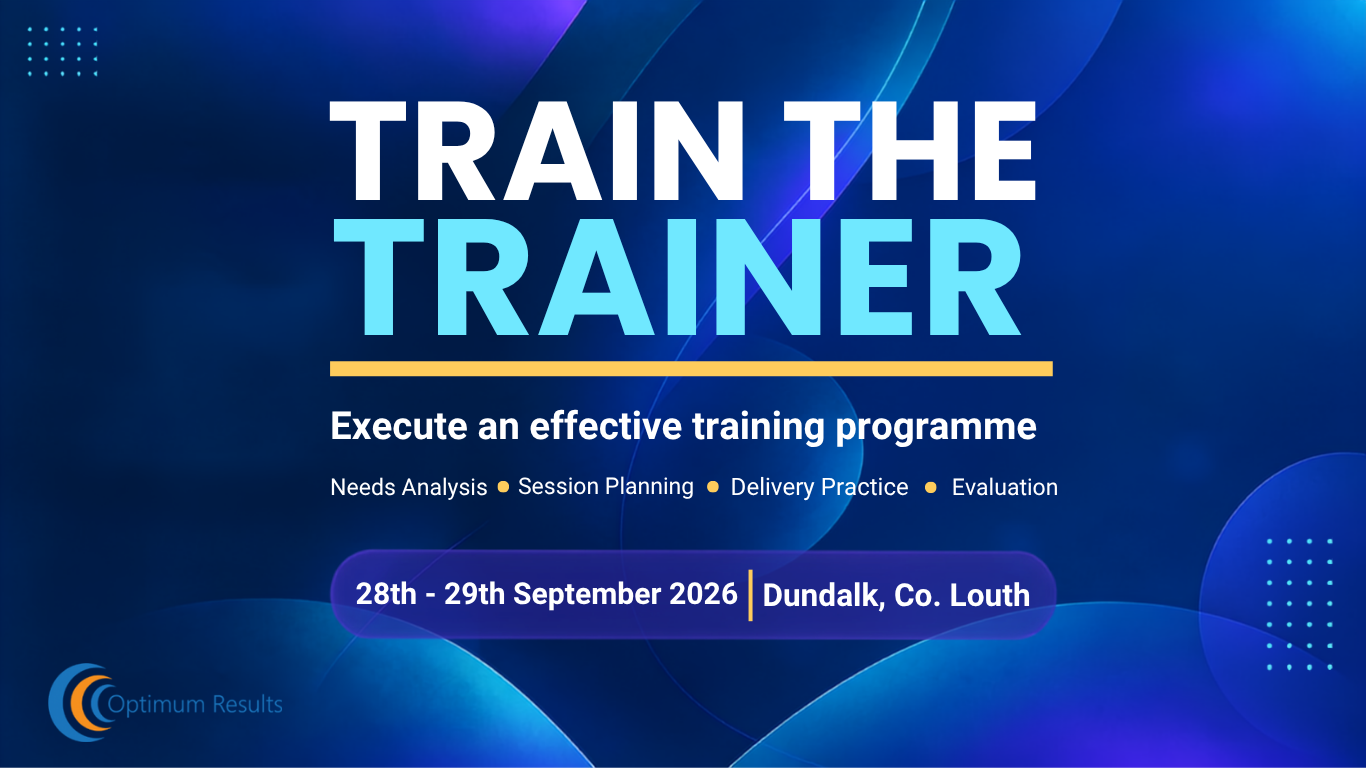
Our Train the Trainer programme helps participants identify training needs, plan effective sessions, engage learners and evaluate learning.
Choose a training format that works for your team
Training for SMEs needs to fit the skills being developed and the working day. A practical workshop may suit a team that needs to rehearse customer conversations. Individual support may work better for an owner or manager dealing with a specific challenge.
Our One-to-One Manager Mentoring provides tailored guidance around individual goals and business needs.
For repeatable information, such as induction content or company procedures, online learning services can support a consistent approach. Combine these with opportunities to ask questions and practise the work.
Irish businesses can also explore Local Enterprise Office training and support when reviewing what is available locally.
Make training part of everyday work
Before training begins, agree what employees should be able to do afterwards. Keep the outcome specific: “handle a customer complaint using our agreed process” is more useful than “improve customer service”.
Use examples from your own workplace during training. Afterwards, give participants an opportunity to apply the skill and receive feedback.
A supervisor might practise a delegation conversation. A customer service employee could apply a questioning technique during an enquiry. An internal trainer might redesign one onboarding session.
Managers should follow up on these actions and help employees overcome any difficulties. This gives learning a place in the working week.
Review what has changed
The value of training for SMEs becomes clearer when you review how people use what they have learned.
Choose a small number of measures linked to your original goal. These could include:
- Fewer repeated mistakes or less rework.
- More consistent complaint handling.
- New starters completing key tasks independently.
- Managers delegating work with clearer instructions.
Record the starting point and agree when to review progress. Ask employees what they have applied, what has helped and where they still need support. Use those findings to decide the next training priority.
How Optimum Results can help with training for SMEs
At Optimum Results, we provide bespoke training and mentoring shaped around your business, your people and the results you want to achieve.
Our training programmes cover management development, business strategy, people development and customer service. We can help you identify an appropriate starting point and discuss a programme suited to your requirements.
Whether your first step is a focused workshop, support for a new manager or a broader development programme, start with a clear goal.
Contact Optimum Results to discuss your training needs and build a practical plan for your team.
More from our blog
-
-
 Reading time: 2 minutesOctober 1, 2026
 -
 Reading time: 2 minutesSeptember 28, 2026
 -
 Reading time: 2 minutesSeptember 16, 2026
 -
 Reading time: 2 minutesSeptember 7, 2026
 -
 Reading time: 2 minutesSeptember 4, 2026